Rafts and Clouds
Acoustic Rafts and Clouds: Enhancing Soundscapes in Modern Architecture
In contemporary architecture and interior design, managing sound within a space has become as critical as managing lighting, temperature, and aesthetics. Acoustic rafts and clouds are innovative solutions used to control sound reflections and reverberation in various environments, ranging from office spaces and educational institutions to restaurants and auditoriums. These suspended acoustic elements not only improve auditory comfort but also contribute significantly to the visual appeal of interiors.
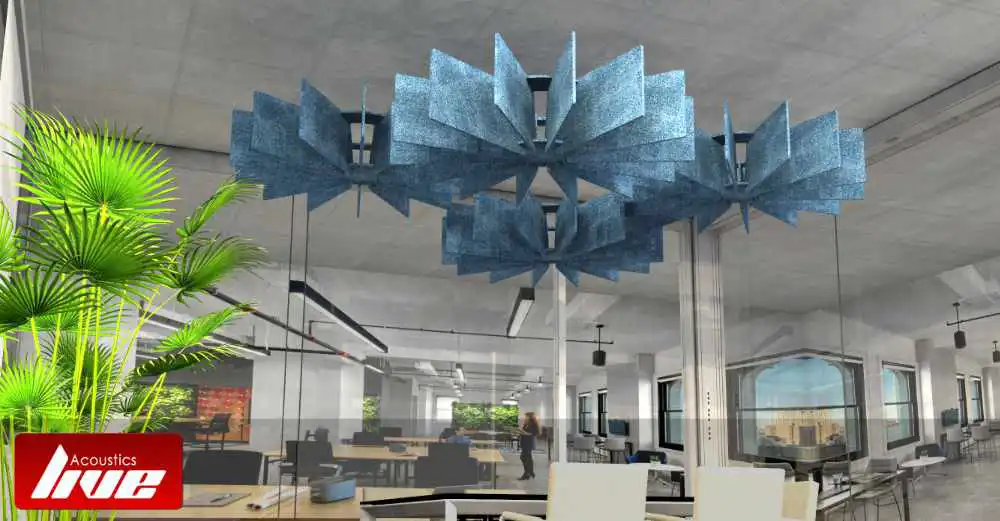
Live Diffraction
Torus Fan Acoustic Raft
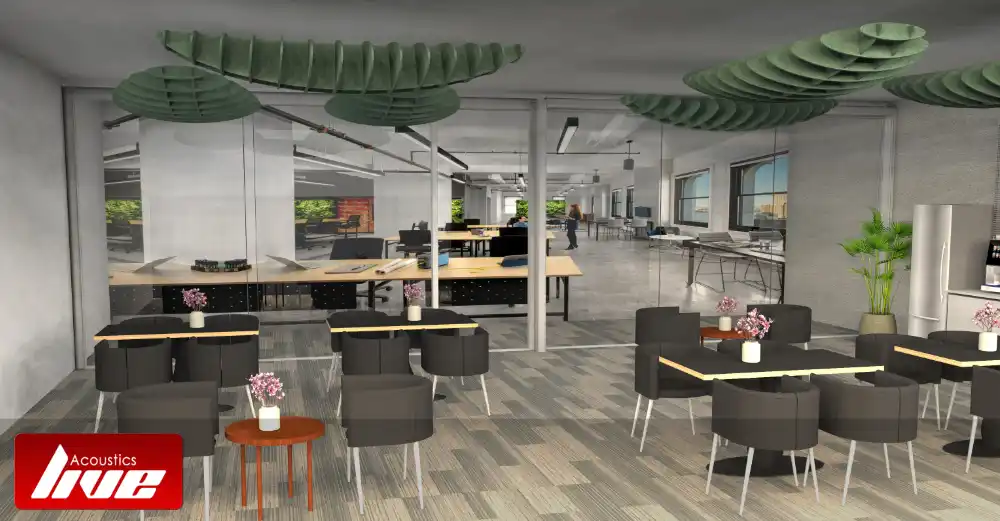
Live Diffraction
Trapezium Acoustic Raft
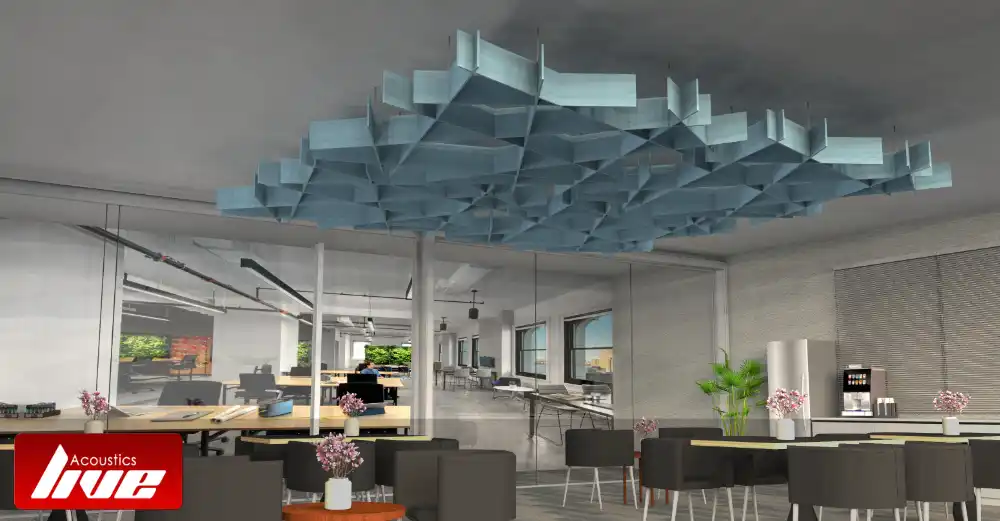
Live Diffraction
Pick Up Sticks Acoustic Raft
What Are Acoustic Rafts and Clouds?
Acoustic rafts and acoustic clouds are types of suspended ceiling panels designed to absorb sound. While the terms are sometimes used interchangeably, there are subtle differences:
-
- Acoustic rafts are flat or slightly curved panels that are suspended horizontally from the ceiling, typically with visible hardware such as cables or rods. They do not cover the entire ceiling and are often used in clusters to target specific areas.
- Acoustic clouds, on the other hand, are more varied in shape and can include curved, irregular, or layered forms. They "float" below the ceiling, creating a cloud-like effect that provides both functional and aesthetic benefits.
- Both types of panels absorb sound energy—especially mid to high-frequency sounds—reducing echoes and controlling reverberation time within a room.
Materials and Construction
The core materials used in acoustic rafts and clouds include:
-
- Mineral wool or fiberglass: These porous materials trap and dissipate sound waves, making them highly effective at absorbing noise.
- Foam-based cores: Less common but still effective, especially in lightweight applications.
- Fabric wrapping: Many panels are covered in acoustically transparent fabric, which allows sound to pass through to the absorbent core while offering a wide range of color and texture options.
- Rigid or semi-rigid backing: This may be included for structural support or additional sound control.
Some designs integrate wood, metal, or other architectural finishes to match specific design themes while maintaining acoustic performance.
Installation Methods
Acoustic rafts and clouds are typically suspended using cables, rods, or proprietary mounting systems. Their height and angle can be adjusted depending on the specific acoustic needs of the space. For example, in a space with a high ceiling, panels can be hung lower to bring acoustic treatment closer to the source of sound, such as a conversation area or workspace.
Installers must consider factors such as:
-
- Ceiling height and structure
- HVAC and lighting systems
- Access requirements for maintenance
- Fire safety codes and building regulations
Modular and lightweight designs simplify installation and allow for flexibility in layout and future reconfiguration.
Acoustic Benefits
The primary acoustic function of rafts and clouds is to reduce reverberation and improve speech intelligibility. When hard surfaces dominate a room—like concrete, glass, or drywall—sound waves reflect repeatedly, creating an echoey and uncomfortable environment. By strategically placing suspended acoustic elements, designers can:
-
- Absorb unwanted sound reflections
- Minimize background noise
- Improve clarity in communication
- Enhance overall acoustic comfort
These improvements are especially critical in open-plan offices, where noise distraction can reduce productivity, and in educational settings, where poor acoustics can hinder learning.
Aesthetic and Design Considerations
Beyond their functional benefits, acoustic rafts and clouds offer significant aesthetic value. Available in a wide range of shapes, colors, and finishes, they can be customized to complement or enhance a room’s visual identity.
Some popular design choices include:
-
- Geometric patterns using square, circular, or hexagonal panels
- Organic shapes that mimic clouds or waves
- Layered or tiered arrangements to create visual depth
- Integrated lighting elements within or between panels
Designers often use acoustic clouds as a way to define space in open areas, such as creating a “ceiling” over a lounge or meeting zone without building walls.
Sustainability and Health Considerations
Many manufacturers now offer acoustic panels made from recycled or sustainable materials, contributing to green building certifications such as LEED or WELL. Additionally, low-VOC (volatile organic compounds) finishes and fire-resistant materials ensure that these products are safe and meet stringent health and safety codes.
Acoustic comfort is also increasingly recognized as a component of occupant well-being. Reducing noise stress and improving clarity in communication can positively impact mental health, learning outcomes, and workplace satisfaction. Acoustic rafts and clouds are powerful tools in modern architectural acoustics, offering a blend of performance, flexibility, and visual appeal. As more spaces adopt open designs and hard surface finishes, the need for intelligent sound control solutions continues to grow. Whether subtly integrated into a minimalist environment or used as bold design features, these floating acoustic elements can transform how a space looks, feels, and sounds.
Live Diffraction
Torus Fan Acoustic Raft
Live Diffraction
Trapezium Acoustic Raft
Live Diffraction
Pick Up Sticks Acoustic Raft