
Restaurant Acoustics
Restaurant Acoustics
Silent Ambience, Loud Profits: Optimizing Acoustic Comfort for Modern Dining.
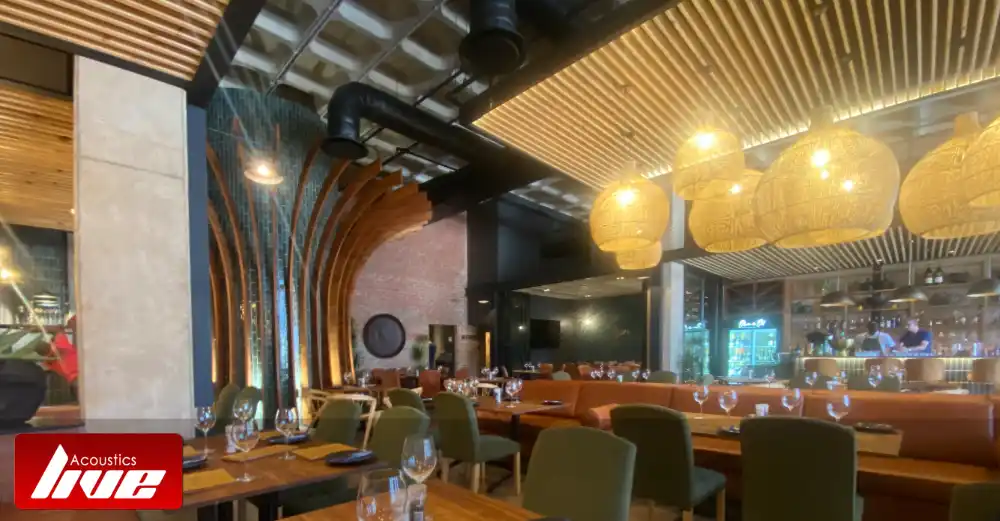
Restaurant Acoustics
Olive and Oil Umhlanga

Restaurant Acoustics
Atasca Westville

Restaurant Acoustics
Elephant & Co, Westown
Why Restaurants Need Acoustics: Enhancing The Dining Experience
In the hustle and bustle of modern dining, it’s not uncommon for patrons to find themselves straining to hear a conversation over clinking cutlery, background music, and the steady hum of neighboring tables due to bad restaurant acoustics. While food and service are central to a restaurant’s success, the soundscape of the dining environment plays a pivotal — yet often overlooked — role in customer satisfaction. That’s where acoustic treatment comes in. Acoustic treatment involves modifying a space to control sound reflections and reduce unwanted noise, creating a more pleasant auditory experience. For restaurants, investing in acoustics isn't just a luxury — it’s a necessity.
The Problem with Poor Acoustics
Many restaurants today prioritize visual aesthetics, opting for sleek, minimalist designs with hard surfaces such as glass, concrete, and metal. While visually appealing, these materials do little to absorb sound. As a result, noise bounces around the space, amplifying conversations, kitchen clatter, and background music into an overwhelming cacophony.
This high level of ambient noise can have serious implications. A study published in the Journal of the Acoustical Society of America found that noise levels in some restaurants regularly exceed 80 decibels — about as loud as a garbage disposal. Not only does this make it difficult for guests to communicate, but it can also lead to discomfort, fatigue, and even hearing damage over prolonged exposure.
The Impact on the Dining Experience
Acoustics directly affect how patrons perceive their dining experience. Excessive noise can hinder conversation, leading to frustration and decreased enjoyment. In contrast, a well-balanced acoustic environment encourages interaction and relaxation. In fact, surveys have shown that noise is one of the top complaints from restaurant diners, often ranked above food quality and price.
For older patrons or those with hearing impairments, noisy environments can make dining out especially challenging. Conversations become difficult to follow, leading to social isolation or reluctance to dine out altogether. For families with young children, overly loud spaces can be overstimulating, leading to discomfort and restlessness.
Benefits of Acoustic Treatment
Improved Customer Experience
Acoustic treatments such as wall panels, ceiling baffles, upholstered furniture, and even decorative elements like curtains or rugs help absorb sound and minimize echo. This creates a more serene, comfortable environment that encourages diners to linger longer and engage more fully with their companions.
Increased Customer Retention and Revenue
A quieter, more pleasant atmosphere often leads to higher customer satisfaction, repeat business, and positive word-of-mouth. Patrons who feel comfortable are more likely to stay longer, order more, and return frequently — all of which contribute to a restaurant’s bottom line.
Enhanced Brand Perception
A well-designed acoustic environment signals professionalism and attention to detail. Just as lighting and decor contribute to a restaurant’s identity, so too does its soundscape. Whether it's a romantic bistro or a lively brunch spot, controlling acoustics helps reinforce the desired mood and brand image.
Better Working Conditions for Staff
Noise affects not only customers but also staff. Constant high noise levels can increase stress, hinder communication between team members, and even lead to long-term hearing issues. Quieter environments make for more efficient service, fewer errors, and a happier, more productive team.
Solutions for Acoustic Optimization
Acoustic treatment doesn’t mean compromising on style. Today’s market offers a wide range of aesthetically pleasing acoustic solutions, from artistic sound-absorbing panels to sleek overhead baffles that double as design features. Open ceilings can incorporate hanging panels or clouds, while walls can feature decorative acoustic art. Even small additions — such as fabric-wrapped furniture, tablecloths, and plants — can contribute to sound absorption.
For new builds, considering acoustics during the design phase is ideal, allowing architects and designers to seamlessly integrate sound control into the overall aesthetic. For existing spaces, retrofitting is possible and can be highly effective with proper assessment by an acoustics consultant.
A Competitive Edge in a Noisy Industry
As the hospitality industry becomes more competitive, every detail counts. Diners are increasingly aware of — and sensitive to — the atmosphere of the places they choose to spend their time and money. In this context, sound is not a background feature; it's a crucial element of the overall experience.
In short, acoustic treatment should be seen not as an optional upgrade but as a fundamental component of restaurant design. A comfortable, conversation-friendly environment enhances satisfaction, encourages loyalty, and sets a restaurant apart from the competition. Because in the end, how a place sounds is just as important as how it looks — or how it tastes.

Restaurant Acoustics
Olive & Oil Westville

Restaurant Acoustics
Elephant & Co, PMB
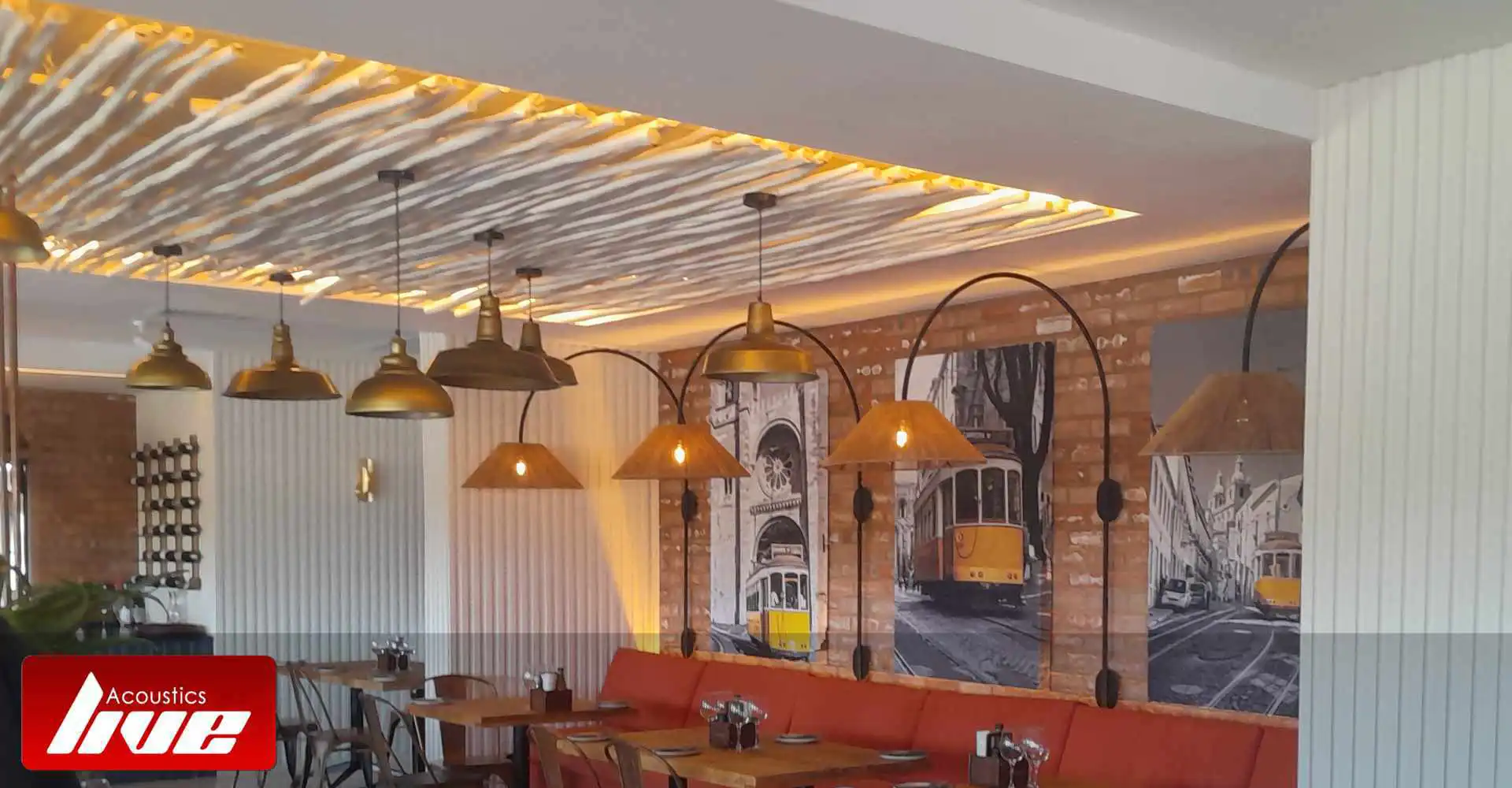
Restaurant Acoustics
Atasca Kloof
Did you Know
High noise levels also dull overall taste sensitivity, forcing the brain to dedicate more cognitive effort to hearing and leaving less processing power for taste and aroma.
Studies in acoustic gastronomy show that ambient noise above 85 decibels suppresses the perception of sweetness and saltiness while enhancing crunchiness and bitter notes. Designing balanced acoustics is not merely a matter of comfort or noise control—it directly impacts the flavor profile and dining experience of the food itself.
Frequently Asked Questions
Here are Some Related Frequently Asked Questions.
What is the "Lombard Effect"?
The Lombard Effect is a psychological phenomenon where people naturally speak louder in response to high background noise. In a restaurant with reflective surfaces, one loud table causes adjacent tables to speak louder, triggering a feedback loop where the entire room gets progressively noisier.
What is the target noise level for a comfortable dining experience?
A comfortable ambient noise level for dining conversation is 65 dBA to 75 dBA. Once room noise exceeds 80 dBA, diners must raise their voices significantly to be heard across a table, triggering the Lombard Effect.
Why are modern restaurants so loud compared to older ones?
Modern interior design heavily favors hard, non-porous surfaces—polished concrete floors, exposed brick walls, steel accents, and glass windows. While these materials are durable and easy to clean, they reflect up to 98% of sound energy, creating an echo chamber (high reverberation time).
What are the most effective visual acoustic treatments for open ceilings?
- Acoustic Baffles & Banners: Vertical panels hung from exposed concrete or open-truss ceilings that absorb sound on both sides.
- Ceiling Clouds: Horizontal panels suspended above dining zones to capture sound at the source before it travels across the room.
- Spray-Applied Acoustic Finishes: Cellulose or mineral fiber sprays applied directly to metal decking for seamless, unobtrusive coverage.